Introducing Facade (Beta), a new scope in Boon Takeoff Intelligence for exterior panel takeoffs across whole elevations. It maps panel boundaries, excludes window and door openings from facade area, and groups material context only when the drawings support a match. Estimators can inspect the overlay and material groups before using the quantity.
An exterior elevation isn’t a clean list of materials. It is one view with panel edges, windows, doors, glazing, dimensions, notes, and references competing for attention. The material code that explains a panel may be somewhere else in the drawing set.
A number at the end of that process can look precise and still be hard to trust. If a window is counted as cladding, or two different finishes become one group, the total needs another pass. Estimators need to see what the system counted, not only what it added up.
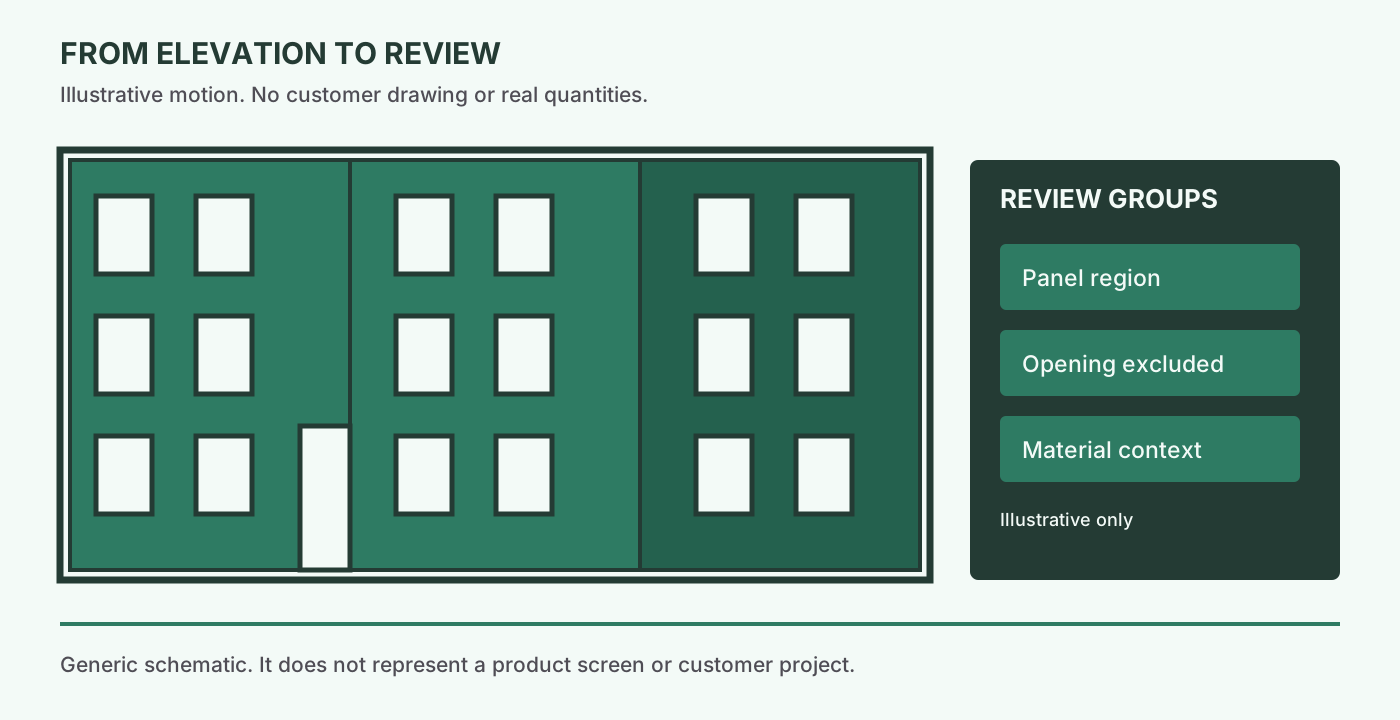
Facade is a defined estimating scope, not a label for every exterior surface. It returns an overlay alongside grouped quantities; window and door openings stay outside the facade area, as do curtain wall, storefront, and glazing, which can be measured separately. Beta means the estimator reviews the boundaries and material groups rather than accepting a total.
The elevation carries context
A facade panel rarely announces itself with one perfect line. Its boundary can sit beside a window frame, a material transition, a keynote, or a dimension. The legend that explains the finish may be on another part of the sheet set. A close crop can make one edge easier to see while hiding the context that gives it meaning.
We built the scope to start with the elevation instead of assuming someone has already found every facade region. It looks across the sheet, narrows its attention to plausible areas, and works more closely on candidate boundaries. That sequence is a practical compromise. Applying the most detailed pass everywhere costs time and resources. Relying on a quick first pass alone risks losing a panel before it can be examined closely.
The compromise also leaves a failure path to inspect. If an unusual region is missed early, later detail can’t bring it back. If an outline is ambiguous, a reviewer should be able to compare it with the surrounding elevation rather than receive a bare quantity. We don’t treat a more detailed image as a substitute for the whole drawing.
Facade is also a defined estimating scope, not a label for every exterior surface. Windows and doors are openings in the facade area. Curtain wall, storefront, and glazing remain outside this scope, where they can be measured separately. Combining those categories would make the facade quantity harder to reconcile with the bid.
A boundary isn’t a material
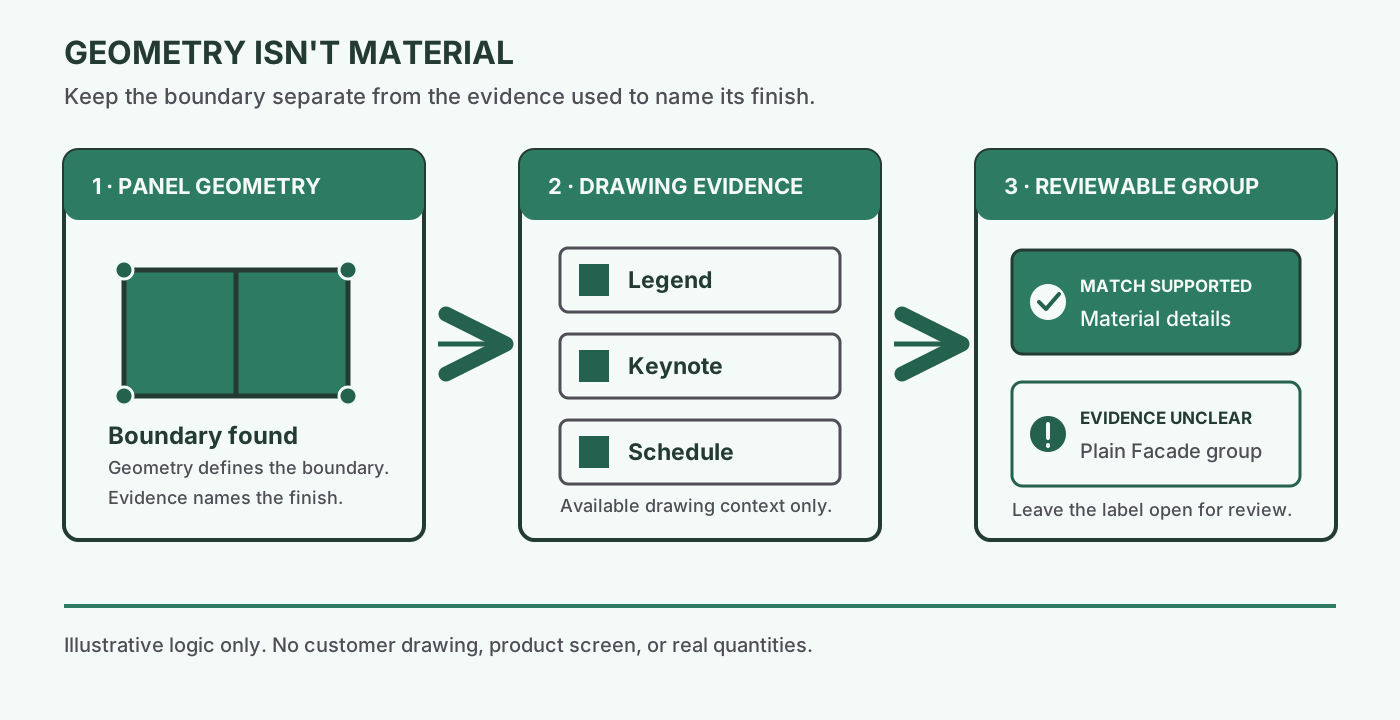
Finding a panel and identifying its finish are related tasks, but they aren’t the same task. A model can trace a boundary without knowing whether the panel is metal, fiber cement, masonry, or something else. A strong geometric result doesn’t prove that a material schedule was read correctly.
The association step looks for material codes and descriptions in the available drawing context, including legends, keynotes, and schedules. When that context supports a match, the output can group panels with material details. When the association can’t resolve the evidence, the fallback is a plain Facade group. That result is less specific. It is also more honest than filling in a material label because one seems likely.
We kept the geometry and the association visible as separate parts of the result. That makes disagreement easier to find. An estimator can question the outline, the assigned code, or the grouping without having to reject an opaque answer as a whole.
The distinction matters in ordinary review. A code may be legible but refer to a different assembly. A finish description may exist without enough context to attach it to a particular panel. The system should leave that work open when the drawing doesn’t settle it. It shouldn’t turn a plausible interpretation into a fact.
Keep the review in view
The output pairs colored panel regions with grouped takeoff quantities. An estimator can compare a region on the elevation with its row in the table, check whether an opening is excluded, and look for a panel that appears in the wrong group. The overlay gives the quantity a source the reviewer can inspect.
That doesn’t make review optional. It changes what the reviewer has to inspect. Instead of tracing every region from scratch, an estimator can start with a first pass, look for missed boundaries or suspect associations, and correct the result before exporting. If a code is missing or uncertain, the generic Facade group keeps that uncertainty visible.
The difference is small in a screenshot and important in a bid. A grouped total without visible boundaries asks the estimator to trust the system. A boundary overlay without grouped quantities asks the estimator to do the accounting again. The two views belong together because they answer different questions.
What the validation covers
The segmentation was evaluated on 59 held-out whole sheets. Curtain wall, storefront, and glazing counted as not facade. That is the boundary the product is meant to measure.
A whole-sheet evaluation matters because the system has to locate the facade before it can trace it. A crop test assumes someone has already found the elevation. Those are different tasks. A score only makes sense alongside the task, sample, and averaging method it describes.
Fifty-nine sheets are useful evidence, not a census of every drawing convention. A different set of annotations or an unusual panel can still expose a miss. The evaluation gives us a place to ask specific questions. It doesn’t certify the next plan set or decide whether a bid quantity is ready.
What the beta doesn’t settle
A new scope doesn’t make every drawing convention predictable. Some elevations have sparse notes. Some material codes depend on a schedule elsewhere. Similar-looking regions can still need an estimator’s judgment. A clean overlay can make an error easier to see, but it can’t make the source drawing clearer than it is.
We could tell a simpler story by collapsing segmentation, material association, and enrichment into one accuracy figure. That would make the announcement easier to scan and the result easier to overstate. Those stages describe different work. A segmentation score, on its own, can’t tell you whether a material label is correct or whether the final takeoff is ready to price.
So we want the first question to stay practical: can you see which regions were counted, what was excluded, and where a material label came from? If not, the right next step is review, not confidence borrowed from a single number.
This is a beta, and that word matters. The scope gives estimators a structured first pass across exterior elevations. It doesn’t remove the need to check the drawing, the group, or the assumptions behind a quantity. We don’t want the user to find that out after an export.
A better test for takeoff
A facade takeoff should show the regions it counted, the openings and surfaces it left out, and the evidence behind each material group. It should leave uncertain labels visible rather than fill them in quietly. Those are useful questions for any takeoff system, including ours.
Facade (Beta) starts from the whole elevation and returns panel geometry an estimator can inspect. The result is not the estimate by itself. It is a more concrete place to begin the review.
We’re still likely to encounter drawing conventions the beta hasn’t seen. The test isn’t whether every first pass looks finished. It’s whether a miss is visible, a label can be challenged, and the estimator can correct the work before it becomes a number in a bid. We haven’t earned a claim that removes judgment from facade estimating. We have built a first pass that gives that judgment something specific to inspect.