The preconstruction leader has a new invitation to bid and a crowded week ahead. In Boon Agent chat, the leader asks: “Run the go/no-go on this ITB before I open it.” The question is whether the team should spend time on this pursuit and what the package says about the work.
Boon reads the invitation and bid package, then returns a go/no-go summary in the chat with the key requirements, possible scope gaps or conflicts, and the sources behind them. For an illustrative municipal library expansion, the summary might point to a delivery condition or bid-form requirement and link it to the relevant document passage.
The estimator verifies the cited findings; the preconstruction leader decides whether to pursue.
Start with one pursuit
Start with one real bid package the buyer can inspect. Ask Boon in chat for a go/no-go summary and follow how it handles the documents that shape the pursuit.
Does the summary make clear what the invitation requests? Does it show where a potential conflict or gap comes from? Can the cited sheet or section be opened to check the surrounding context? Does the output remain a draft until a person approves it?
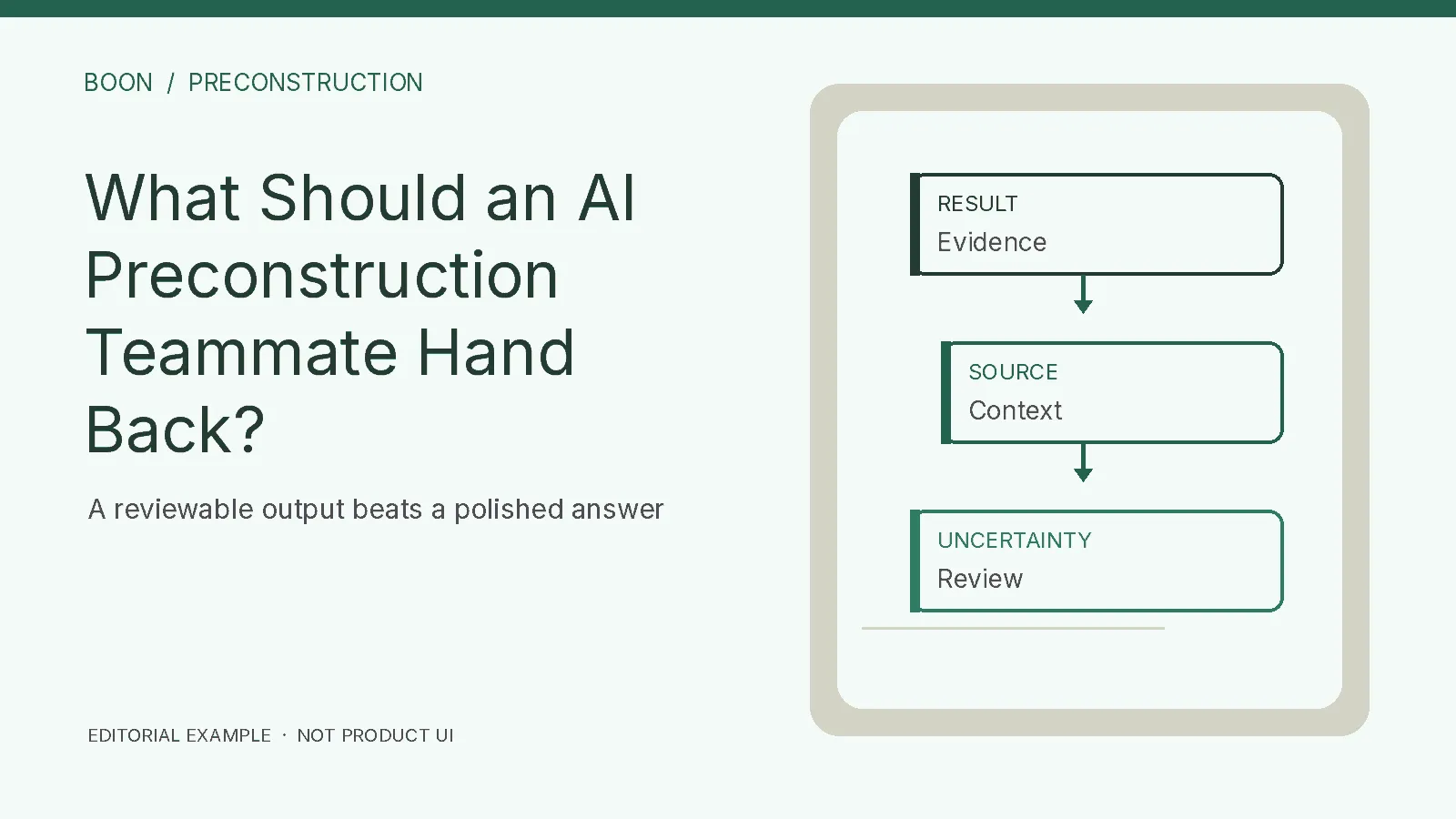
Those are practical questions. They tell the buyer whether the work product is reviewable, not merely readable. A fluent paragraph may sound helpful, but the source trail matters when the team needs to explain a decision to a principal, estimator, or project executive.
Inspect the handback
A go/no-go summary should help the leader spend attention where it matters. If the package includes a possible drawing/specification conflict, the summary should identify it and show the relevant source references. If the information is unclear, that uncertainty should be visible rather than hidden behind a recommendation.
The buyer should also ask what is meant by “go.” The summary can bring project facts, schedule conditions, scope questions, and team capacity into the pursuit discussion. The firm’s criteria give those facts meaning.
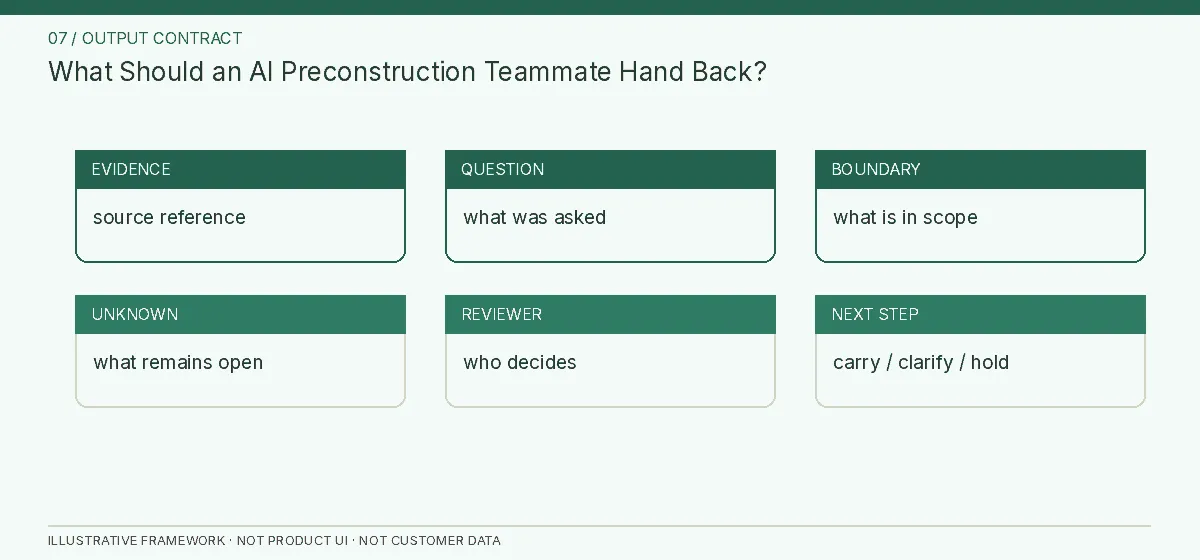
What to test
A short evaluation can focus on a few questions:
- Evidence: Can the estimator return from a statement to the cited sheet or section?
- Useful handoff: Does the summary name a possible scope gap or conflict in language the team can discuss?
- Decision basis: Does the response connect the pursuit recommendation to the invitation’s actual requirements?
Evaluate the workflow with a bid package and source set the buyer can inspect.
The series in one place
The companion drafts cover evidence handoff, drawing/spec conflicts, proposal scope, trade-by-trade spec review, quantity discrepancies, early ROM, addenda review, bid leveling, and RFIs. Each centers on one distinct preconstruction decision.
Boon’s pursuit summary sits alongside addendum diffs, quote leveling, and cited RFI drafts. That’s all of precon in one AI.
Related: Boon Agent Run the go/no-go on this ITB before I open it · Book a demo